
Celebrating Local Ingredients at Syrco BASÈ
Bali can be tasted in many ways: in the heat of sambal, the fragrance of torch ginger, the depth of slow-cooked spice, the freshness of coconut or the clean flavour of fish caught that morning. At Syrco BASÈ in Ubud, local ingredients are not used simply to make a dish feel Balinese. They are the starting point for understanding the island, its people and its culinary traditions.
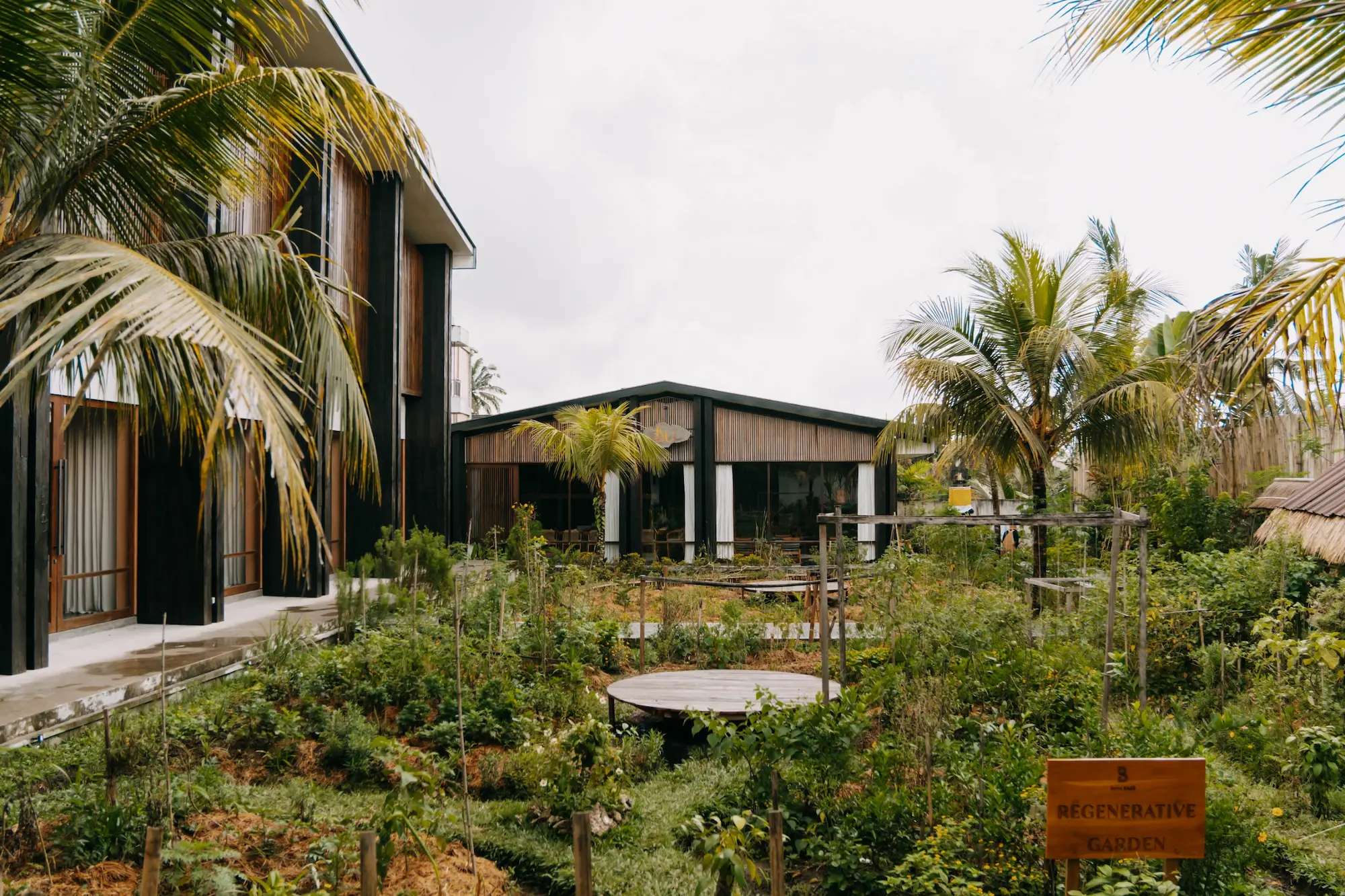
Chef Syrco Bakker and his team work closely with farmers, fishermen, growers and artisans across Bali. These collaborators, known as the Bali Heroes, connect the kitchen directly to the origins of what it serves. Their products shape the menus at Syrco BASÈ Fine Dining Restaurant, Bar and KU Culinary Atelier, the intimate 12-seat chef's counter located within the same regenerative garden.
For guests looking to experience local ingredients and Indonesian flavours through contemporary dining in Ubud, each dish offers a different way into Bali's story.
Local Begins with Knowing the Source
An ingredient does not become meaningful simply because it was grown nearby. At Syrco BASÈ, local sourcing begins with traceability: knowing the person, place and process behind the product.
This changes the relationship between producer and chef. Oka, one of the restaurant's fishermen, catches according to the sea's supply rather than the kitchen's demand. He sends photographs each morning, and the team selects from what has actually been caught. The fish on the menu therefore begins with the conditions of that day, not with a standing order.
Mansur rice, a local heritage rice produced by Begawan, comes with the knowledge of the people who cultivate it. Chicken and heritage pork are chosen through producers who can explain how the animals are raised. Tomatoes, vegetables, herbs and tea arrive through direct relationships. The point is not to assemble a list of local products, but to build trust and understanding around them.
Ingredients from the Regenerative Garden
Some of the shortest journeys happen inside Syrco BASÈ itself. The regenerative garden grows herbs, vegetables, edible flowers and tropical plants for the kitchen and bar.
Ingredients are harvested by hand and used according to their natural moment. Young coconut, picked by gardener Virdo, can bring sweetness, freshness and texture to a dish. Garlic flower and kumis kucing can finish a bite with character drawn directly from the garden. Leaves, roots and botanicals become infusions, garnishes, cocktails and alcohol-free pairings.
Because the garden is alive, it also sets limits. Weather affects growth. Quantities change. A product may be abundant one week and unavailable the next. The chefs respond by adjusting dishes and allowing the ingredient, rather than a fixed idea, to lead.
Bali's Flavours Through a Contemporary Lens
Michelin Star Chef Syrco's cooking combines modern Western technique with the flavours and culinary knowledge of Bali and the wider Indonesian archipelago. The balance matters. Technique should clarify an ingredient, not make its identity disappear.
The duck betutu at KU Culinary Atelier shows this clearly. Traditional betutu is intensely spiced, wrapped in banana leaf and cooked slowly until tender. At KU, a Balinese duck is dry-aged for 14 days, concentrating flavour and drying the skin so it can become crisp. The breast is cooked rosé, while other parts of the bird are prepared with the spices and depth of betutu and placed at the centre of a roulade.
The dish connects two traditions while respecting the logic of both. European technique brings a different texture and structure; Balinese cooking provides its heart.
Using More of Every Product
Celebrating an ingredient also means taking responsibility for how it is used. The kitchen looks beyond the most obvious cut or perfect-looking part.
Chicken skin can become a delicate tartlet filled with tarragon mayonnaise and prawn tartare, with pickled jicama bringing brightness and texture. Fermentation, ageing and preservation give surplus ingredients a longer life and create new flavours. Parts that cannot return to a dish can move into the restaurant's waste system, where green waste is kept in-house and used to support the regenerative garden.
This approach is practical rather than decorative. Respect for an ingredient is visible in how carefully the kitchen uses it, not only in how beautifully it is presented.
More Than Food on the Plate
The celebration of Bali continues through the objects and people surrounding the meal. Local and Indonesian artisans create pottery, knives and recycled glassware. Water, tea, wine and spirits are selected with the same attention to origin and story. At the Bar, the garden becomes a botanical drinks programme; in the Shop, craftsmanship becomes something guests can take with them.
At KU, guests walk through the garden and receive a blessing at the Padmasana before dinner. These moments add cultural and physical context without turning Bali into a theme. They place the meal within the living environment from which it comes.
Taste Bali in Ubud
Syrco BASÈ celebrates Bali by staying curious about it. The team listens to producers, studies traditions and works with what the island offers each day. The result is not a fixed definition of Balinese cuisine, but an evolving conversation between ingredient, technique, memory and place.
For travellers searching for a restaurant in Ubud that puts local ingredients at the centre, Syrco BASÈ offers a close look at Bali through the people who grow, catch, make and cook its food.