
Farm-to-Table Restaurant in Ubud: How It Comes to Life at Syrco BASÈ
Farm to table is often used to describe food that comes from nearby. At Syrco BASÈ in Ubud, Bali, it means something more specific: knowing who grew, caught or made each product, understanding how they work, and allowing what is available to shape the menu.
Set around a regenerative garden, Syrco BASÈ brings together a restaurant, bar, shop and KU Culinary Atelier, an intimate chef's counter for a maximum of 12 guests. Across each experience, the connection between origin and plate remains visible. Ingredients arrive with a name, a place and a story. Some grow only steps from the kitchen. Others come through long-term relationships with farmers, fishermen, growers and artisans across Bali.
This is how farm-to-table dining in Ubud becomes part of the everyday rhythm at Syrco BASÈ, rather than simply a phrase on the menu.
It Starts with Traceability
Farm to table begins before anything reaches the kitchen. Traceability, one of Syrco BASÈ's three core values alongside Nature and Transparency, means looking beyond a product to the person and process behind it.
The team works directly with a network of producers known as the Bali Heroes. They are not anonymous suppliers. They are collaborators whose knowledge influences how the kitchen cooks. There is Oka, a local fisherman who works on supply rather than demand. Each morning he shares photographs of the day's catch, and the chefs choose from what the sea has provided instead of ordering a predetermined species or quantity.
The same relationship-led approach applies to Mansur rice, a local heritage rice from Bali, as well as poultry, pork, vegetables, tomatoes, tea, ceramics and other elements of the experience. It allows the team to ask better questions: Where did this come from? How was it grown or caught? What is at its best today? The answers determine what appears on the plate.
A Regenerative Garden in the Middle of the Restaurant
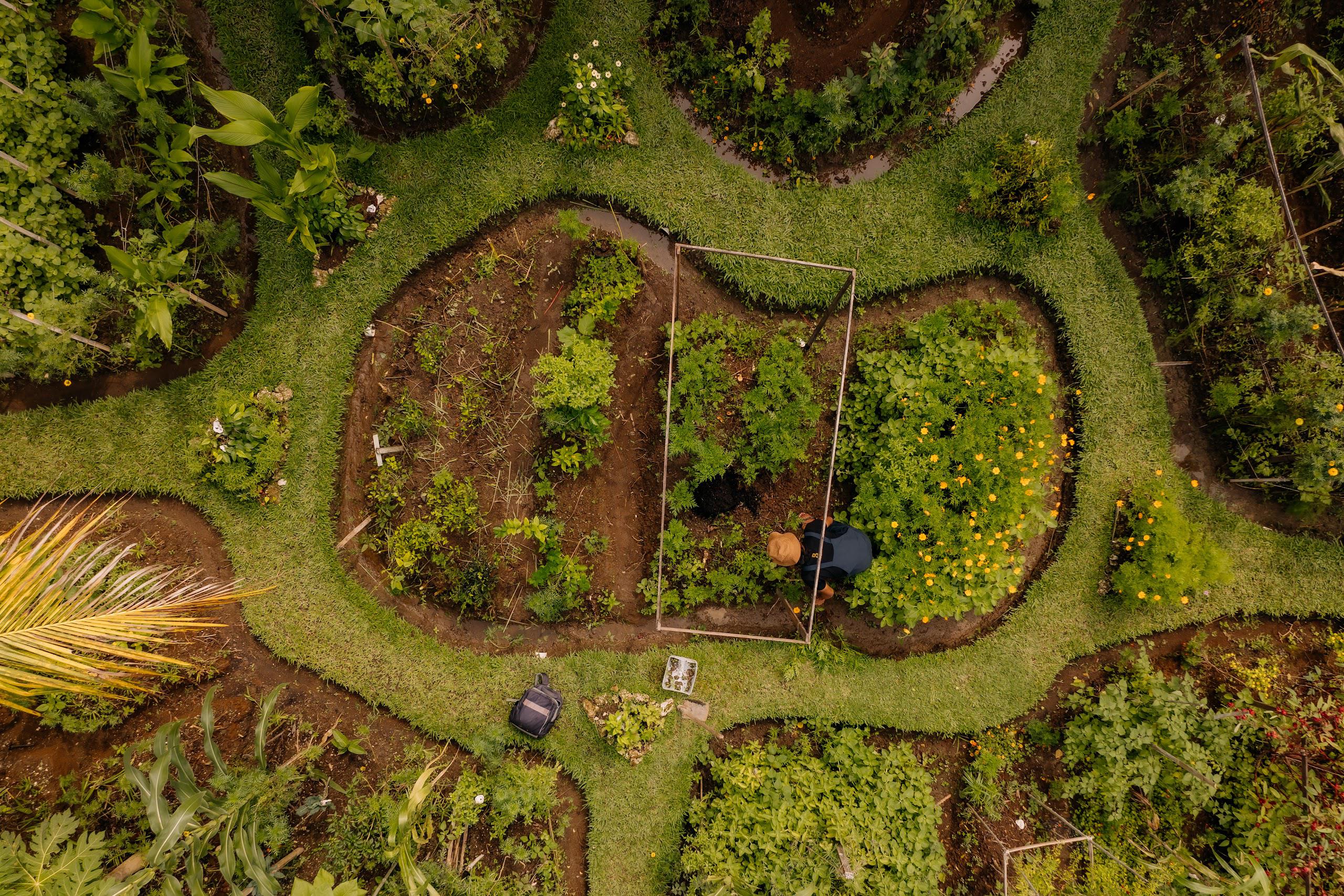
The garden at Syrco BASÈ is not a decorative backdrop. It is a working part of the restaurant, growing herbs, edible flowers, vegetables and tropical ingredients that move directly into the kitchen and bar.
Chef Syrco Bakker and his team use the garden as a place to observe, test and learn. A young coconut harvested by gardener Virdo may become part of a dish. Flowers and aromatic leaves can add freshness or character to a final plate. Behind the bar, herbs, roots and botanicals are explored in cocktails and alcohol-free drinks.
The garden also makes seasonality impossible to ignore. Plants do not follow a fixed menu calendar. Rain, heat and soil all influence what grows and when. Rather than forcing consistency, the kitchen adapts. A dish may change because one ingredient is thriving and another is temporarily unavailable. That flexibility keeps the food connected to Bali's natural rhythm.
From Kitchen Waste Back to Living Soil
The farm-to-table story does not end once an ingredient has been served. Syrco BASÈ keeps its green waste in-house and looks for ways to return value to the land.
Organic kitchen waste is processed through systems including black soldier fly composting and then used to enrich the soil in the regenerative garden. Fermentation and preservation help the team extend the life of ingredients and use parts that might otherwise be discarded. Rainwater collection supports the water cycle.
These practices are not presented as a claim of perfection. They are practical decisions that help reduce waste, improve the soil and keep the relationship between kitchen and garden moving in both directions. What comes from the land is used with care; what remains is given a new purpose wherever possible.
The Producers Shape the Menu
For Chef Syrco, working farm to table is not about taking a local ingredient and fitting it into a European dish. It starts with listening to the people who know that ingredient best.
Before the kitchen reinterprets an Indonesian preparation, the team studies why it is made that way, which techniques give it meaning and what cultural history it carries. European discipline and modern technique can then support the product without overpowering it.
That approach is visible in dishes such as the dry-aged duck betutu served at KU Culinary Atelier. A Balinese duck is aged for 14 days to develop flavour, texture and crisp skin. The breast is cooked rosé, while the remaining parts carry the deep spices and slow-cooked character of traditional betutu at the centre of a roulade. It is not tradition replaced by technique, but two culinary languages brought together with respect.
Experience Farm-to-Table Dining in Ubud
At KU Culinary Atelier, guests begin with a walk through the regenerative garden before receiving a blessing at the Padmasana and taking their seats at the chef's counter. The journey makes the relationship between soil, ingredient, team and dish tangible before dinner begins.
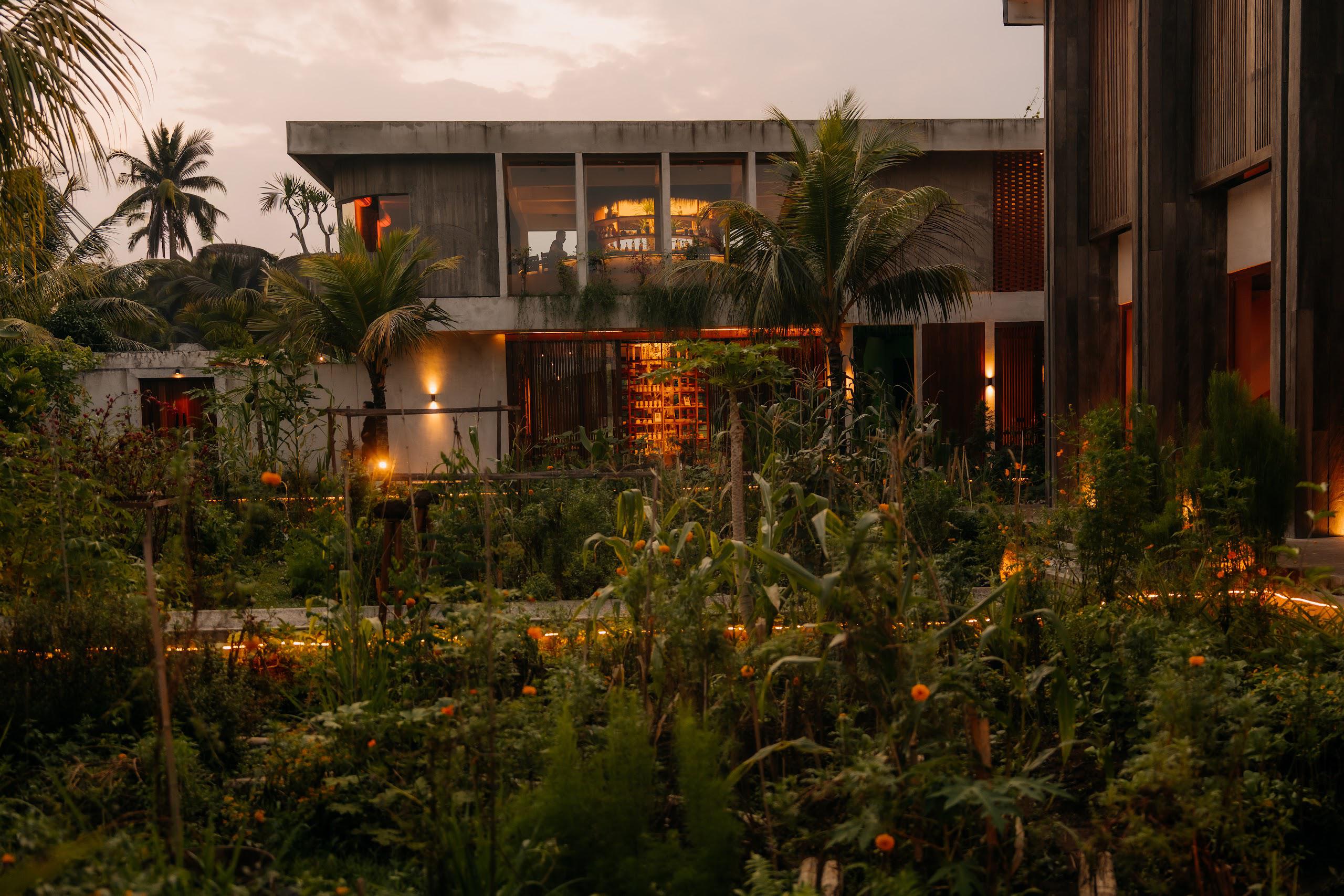
At Syrco BASÈ Restaurant and Bar, the same philosophy takes a more relaxed form through seasonal menus, botanical drinks and dishes built for sharing. The shop extends the story to local craftsmanship, with work from Indonesian makers and artisans.
For travellers looking for a farm-to-table restaurant in Ubud, Syrco BASÈ offers more than proximity. It offers traceability: a clear connection to the people, places and natural systems behind every experience.